More information
Improve health, productivity and save costs with the Nanoenvi IAQ air quality monitoring system for offices.

Optimise ventilation

Higher productivity

Cost savings

Accredited monitor

HVAC integration

ESG commitment
Thanks to its continuous measurement of CO₂, airborne particles, volatile organic compounds, temperature and humidity, this air quality sensor for healthy offices and buildings provides real-time information on the air quality in the workplace, meeting rooms, offices and common areas, improving well-being and productivity throughout the organisation.
Nanoenvi IAQ has been specifically designed for offices and corporate spaces that seek to protect the health of their employees, comply with current regulations and move towards green building certifications such as WELL, LEED or BREEAM.

Studies have shown that poor ventilation, high CO₂ levels or the presence of certain pollutants can cause fatigue, headaches, difficulty concentrating and a higher rate of sick leave.
The phenomenon known as Sick Building Syndrome is very common in poorly ventilated workspaces, causing recurring symptoms such as eye irritation, nasal congestion, dizziness or drowsiness that disappear when leaving the workplace.
Although it often goes unnoticed, this problem affects thousands of workers and results in a considerable loss of productivity for companies.
">Indoor air quality in offices has a direct impact on the health, well-being and performance of workers.
Studies have shown that poor ventilation, high CO₂ levels or the presence of certain pollutants can cause fatigue, headaches, difficulty concentrating and a higher rate of sick leave.
The phenomenon known as Sick Building Syndrome is very common in poorly ventilated workspaces, causing recurring symptoms such as eye irritation, nasal congestion, dizziness or drowsiness that disappear when leaving the workplace.
Although it often goes unnoticed, this problem affects thousands of workers and results in a considerable loss of productivity for companies.
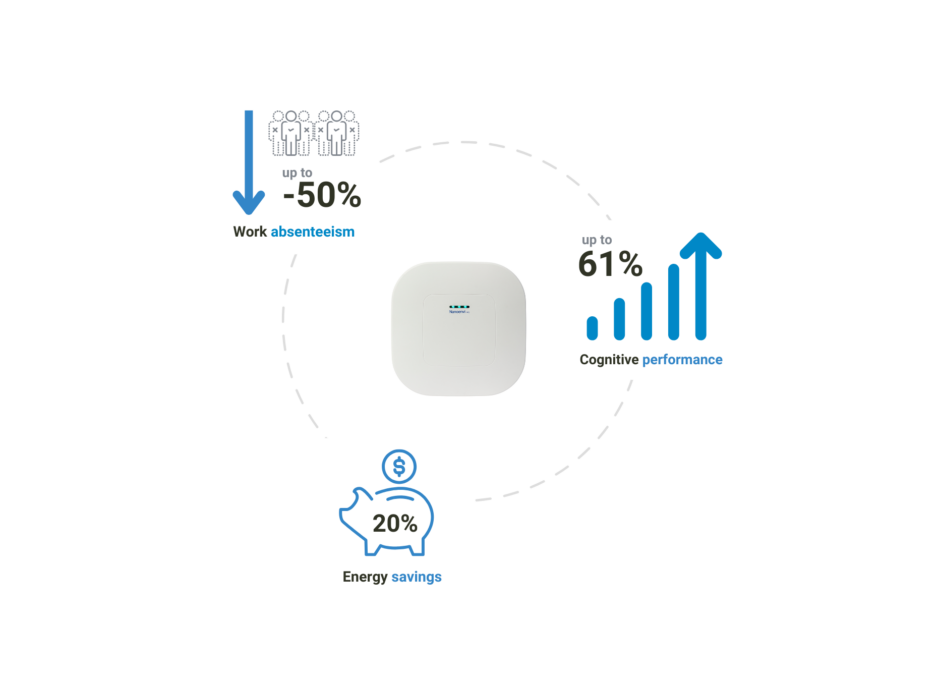
Organisations that actively control air quality enjoy benefits such as:

Carbon Dioxide & Carbon Monoxide
High occupancy in a closed work environment causes CO2 levels to rise, which directly affects indoor air quality, causing dizziness, fatigue and decreased cognitive performance. Monitoring CO2 helps ensure a fresh and safe environment by optimising ventilation and proper air circulation.

Volatile Organic Compounds
VOCs are easily evaporated gaseous pollutants emitted by numerous sources, ranging from building materials and furniture to photocopiers and even cleaning products and personal hygiene products. Monitoring volatile organic compounds is crucial to preventing long-term risks and damage, especially in poorly ventilated enclosed spaces.

Airborne Particles PM
Prolonged exposure to airborne particles, mainly PM2.5 and PM10, has very negative effects on health. They are frequently found in work environments and generally come from office materials that release fine dust, poorly maintained air conditioning and ventilation systems, or directly from outside due to urban traffic or nearby construction work.

Temperature & Humidity
Inadequate temperature and humidity affect both thermal comfort and cognitive performance. Measuring temperature and relative humidity not only improves daily well-being in the office but also prevents health problems and ensures compliance with the environmental conditions recommended by organizations such as the WHO organization.
Earn points more easily
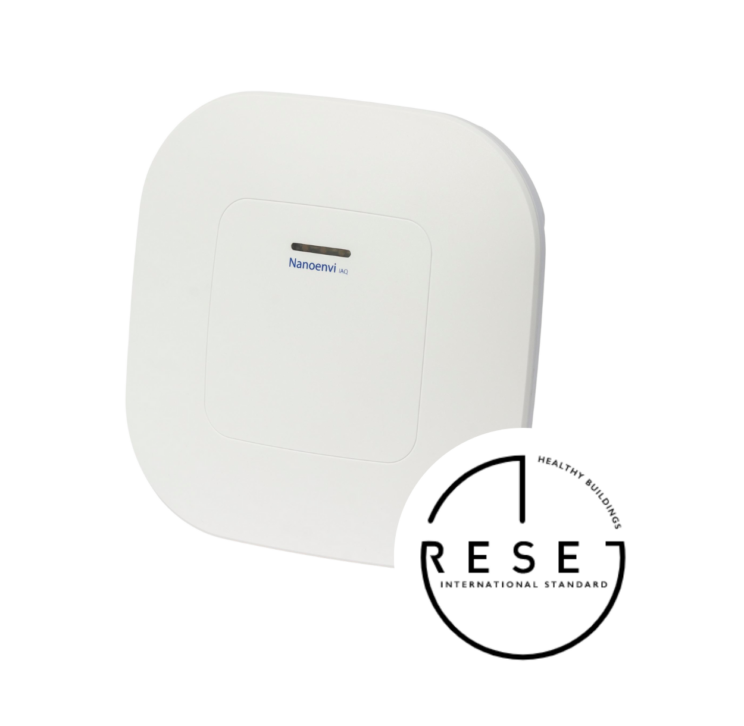
Having passed rigorous laboratory tests that certify the accuracy of its sensors, uncertainty about measurement quality is eliminated, a critical point in performance verification.
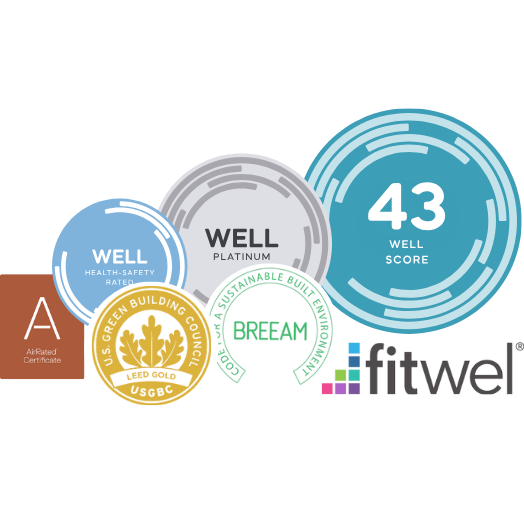
If you are a professional consultant, save a significant amount of time and effort in preparing and submitting documentation by simply presenting your RESET accreditation certificate to obtain the following certifications:
As a professional sensor, its configuration is designed to facilitate integration with building management systems (BMS) and HVAC systems via the MQTT protocol, turning environmental measurement into an active and automated tool for comfort and energy efficiency control.
Instead of simply detecting problems, the system can react automatically and in real time to data collected by air quality sensors.
This intelligent ventilation based on actual demand allows HVAC systems to be adjusted according to actual levels of CO2, VOCs or suspended particles, improving air quality without wasting energy.
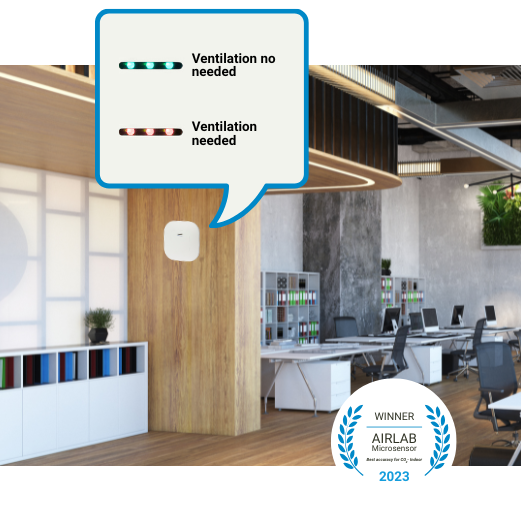
In fact, the Nanoenvi IAQ smart device features CO2 measurement sensors that have been awarded at the AIRLAB Paris competition for their high precision in monitoring indoor air quality.
Thanks to its compact design and easy installation, this professional IAQ sensor can be placed in any office or workspace without altering its design and without the need for any construction work.
The Nanoenvi IAQ device has been designed to provide accurate, continuous, real-time measurements of the main parameters that affect indoor air quality in work environments. Its advanced IoT sensor technology detects invisible pollutants that directly affect the health and comfort of occupants in a workspace.
Data accessible to all users in the workplace
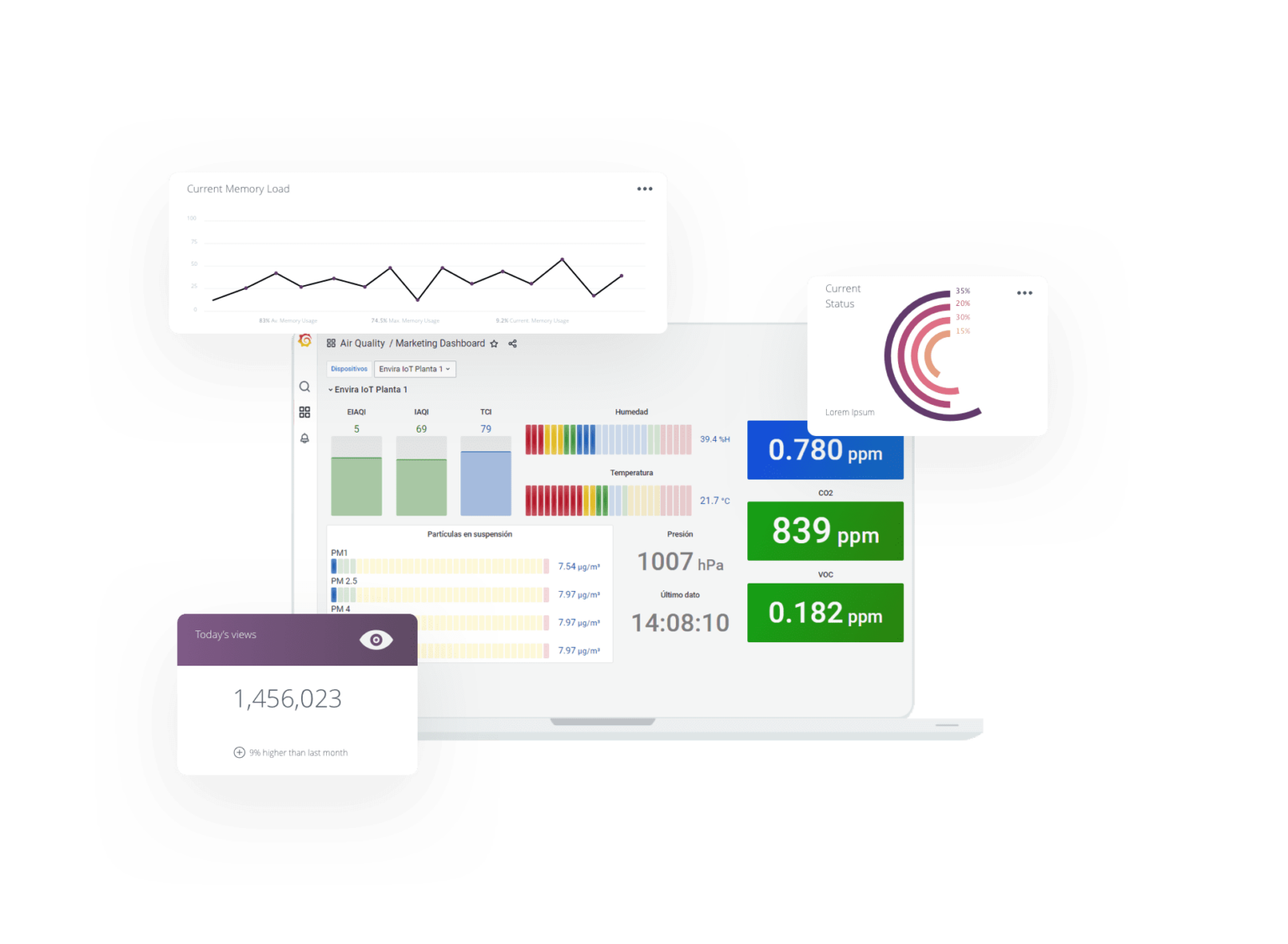
The data collected by the air quality sensors is available on a multi-user data visualisation platform: all you need is an internet connection to check the air quality in real time from any device.
This platform facilitates the creation of customised alerts that send a notification when a parameter exceeds the established levels, which is a very useful tool for maintenance teams.
In addition, the MQTT protocol also allows air quality data to be integrated into proprietary management platforms if the organisation has them.
Measuring and controlling indoor air quality in workspaces is a strategic decision that reinforces the ESG pillars of any company.
Reduction of unnecessary emissions
Integrating the monitor with HVAC and BMS systems optimises ventilation and reduces energy consumption, helping to lower the building's carbon footprint.
Well-being and occupational health
Controlling indoor air quality improves working conditions, reduces absenteeism and increases job satisfaction, reinforcing the company's image and commitment to the well-being of its employees.
Traceability and regulatory compliance
Having historical records and auditable measurements facilitates transparency for inspections, sustainability reports, and certifications.
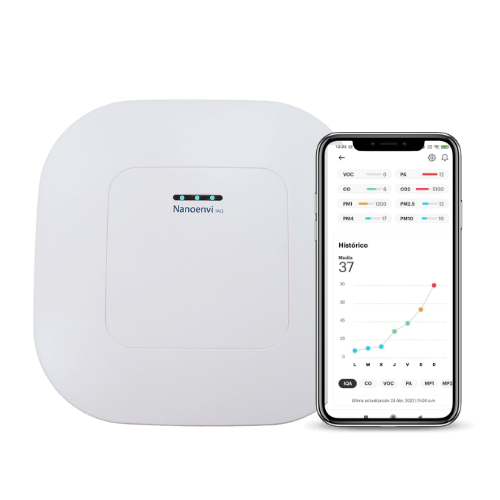
The device measures CO₂, PM1, PM2.5 and PM10 particles, volatile organic compounds (VOCs), carbon monoxide (CO), temperature and relative humidity. All of these factors directly affect the health and comfort of workers.
Yes. Monitoring parameters such as CO₂, VOCs and particles is one of the requirements for obtaining wellness and sustainability certifications such as WELL, LEED and BREEAM. In addition, being RESET certified allows you to use ‘Crosswalks’, which save time and effort in the certification process.
Yes, using standard protocols such as MQTT. This enables smart ventilation, energy savings and centralised control.