More information
Wisely manage indoor air quality in smart & sustainable buildings and PropTech environments to create healthier, more efficient and connected spaces.

Integratable via MQTT

Certification points

Higher asset value

Energy optimization

Great accuracy

Plug & Play solution
In both sustainable building and PropTech technology, accurate, real-time monitoring of Indoor Air Quality (IAQ) is essential for optimising building performance. Ensure the well-being of occupants and achieve prestigious sustainability certifications such as WELL, LEED and BREEAM.
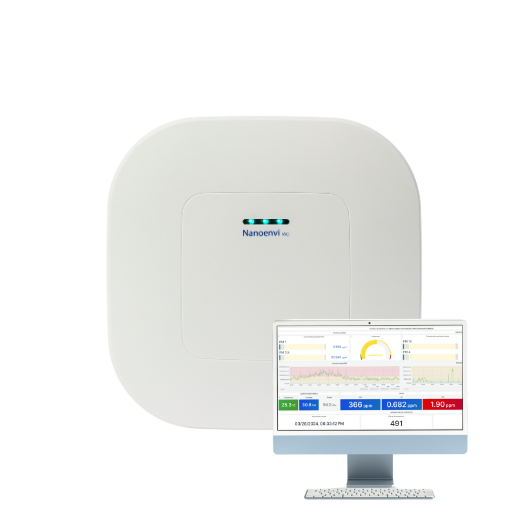
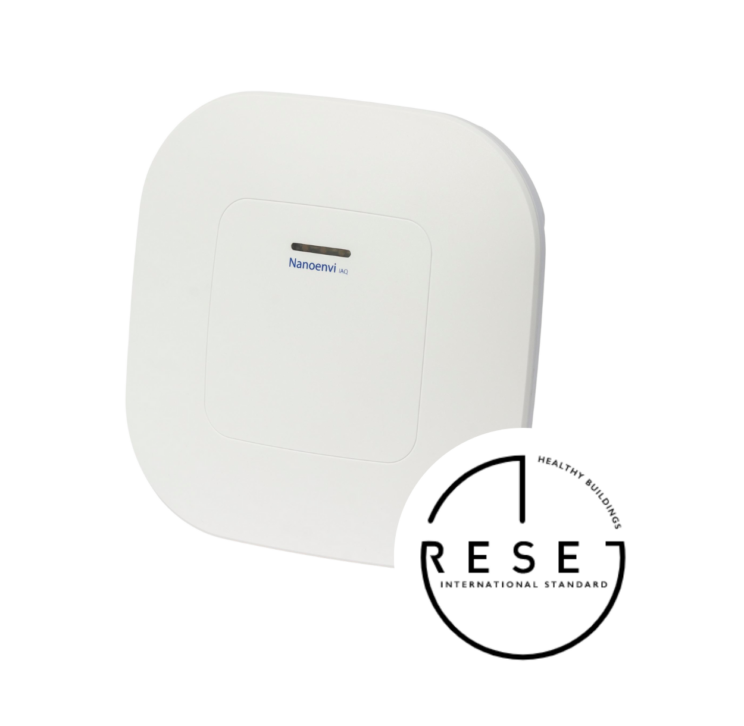
The Nanoenvi IAQ smart monitor is the perfect solution for air quality control in smart buildings, integrating European precision sensors and IoT connectivity to meet the most demanding requirements of Smart Buildings.

Perception of comfort, cognitive performance and reduction of ailments are all strongly linked to indoor air quality, which directly impacts the health and performance of occupants.
Clean, controlled air attracts tenants and encourages them to stay for longer.
This increases the value of the property and enables higher rental rates to be achieved compared to buildings with poor indoor air quality.
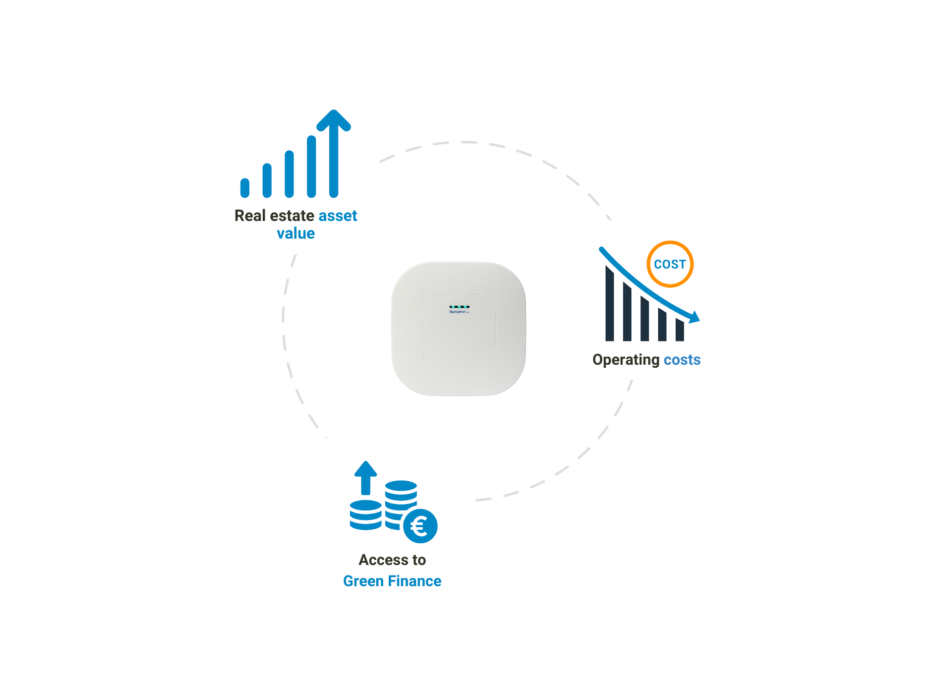
Investing in environmental monitoring not only improves the health and well-being of occupants, but also increases the market value of the property.
Buildings with sustainability credentials are perceived as higher value assets by investors and developers, which translates into higher rents or higher sale prices.
In addition, integration with BMS systems reduces operating costs and improves energy efficiency.
Properties certified for their indoor environmental quality gain access to better green financing conditions, higher occupancy and stand out in competitive markets.

Carbon Monoxide and Dioxide
CO₂ is a direct indicator of ventilation and occupancy in a space. High levels cause fatigue, loss of concentration and a feeling of stale air. Proper monitoring allows mechanical ventilation to be adjusted automatically, improving energy consumption and comfort.

Particulate matter PM
Fine particles penetrate the respiratory system and are associated with cardiovascular and respiratory problems. Controlling their concentration is key in urban buildings to ensure the proper functioning of the ventilation system's filtration.

Volatile Organic Compounds
VOCs are chemical substances emitted by paints, furniture, cleaning products, and building materials that affect air quality, causing irritation, headaches, and dizziness. Measuring VOCs helps reinforce a building's health and well-being strategy.

Temperature and Humidity
Both temperature and humidity directly affect thermal comfort, a key factor that influences well-being and work performance. Precise control of these parameters allows you to optimise the balance between energy efficiency and comfort.
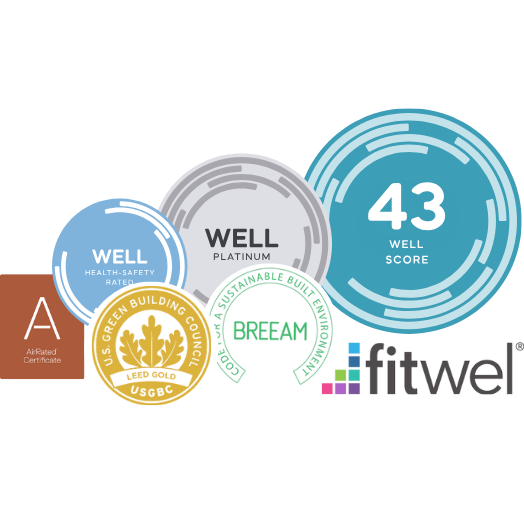
Green certifications such as WELL, LEED, BREEAM and Fitwel are essential in the field of smart buildings because they not only validate environmental commitment, but also add economic, social and strategic value to real estate assets.
The Nanoenvi IAQ IoT device allows you to earn direct points in the air quality and thermal comfort sections of the main sustainable certifications. Thanks to its RESET accreditation, it guarantees data reliability and facilitates the submission of the necessary documentation for audit and verification processes.
Buildings with sustainability certifications and environmental credentials are perceived as higher value assets by investors and developers, avoiding depreciation due to brown discount.
Obtaining these types of certifications allows real estate assets to be aligned with environmental regulations as well as the demands of investors and occupants.
Measuring indoor air quality with RESET-accredited monitors allows points to be obtained in:
Check out the Guide to earning points in sustainability certifications with Indoor Air Quality.
The Nanoenvi IAQ is not a stand-alone device, but a key component within the digital ecosystem of a Smart Building. Its open architecture and advanced connectivity allow it to be integrated with the main management platforms.
Designed to integrate with management systems
Equipped with the standard MQTT protocol, the Nanoenvi IAQ sensor allows direct communication with any BMS system or IoT platform.
This facilitates real-time HVAC system automation, increasing or reducing ventilation according to CO2 levels and other pollutants.
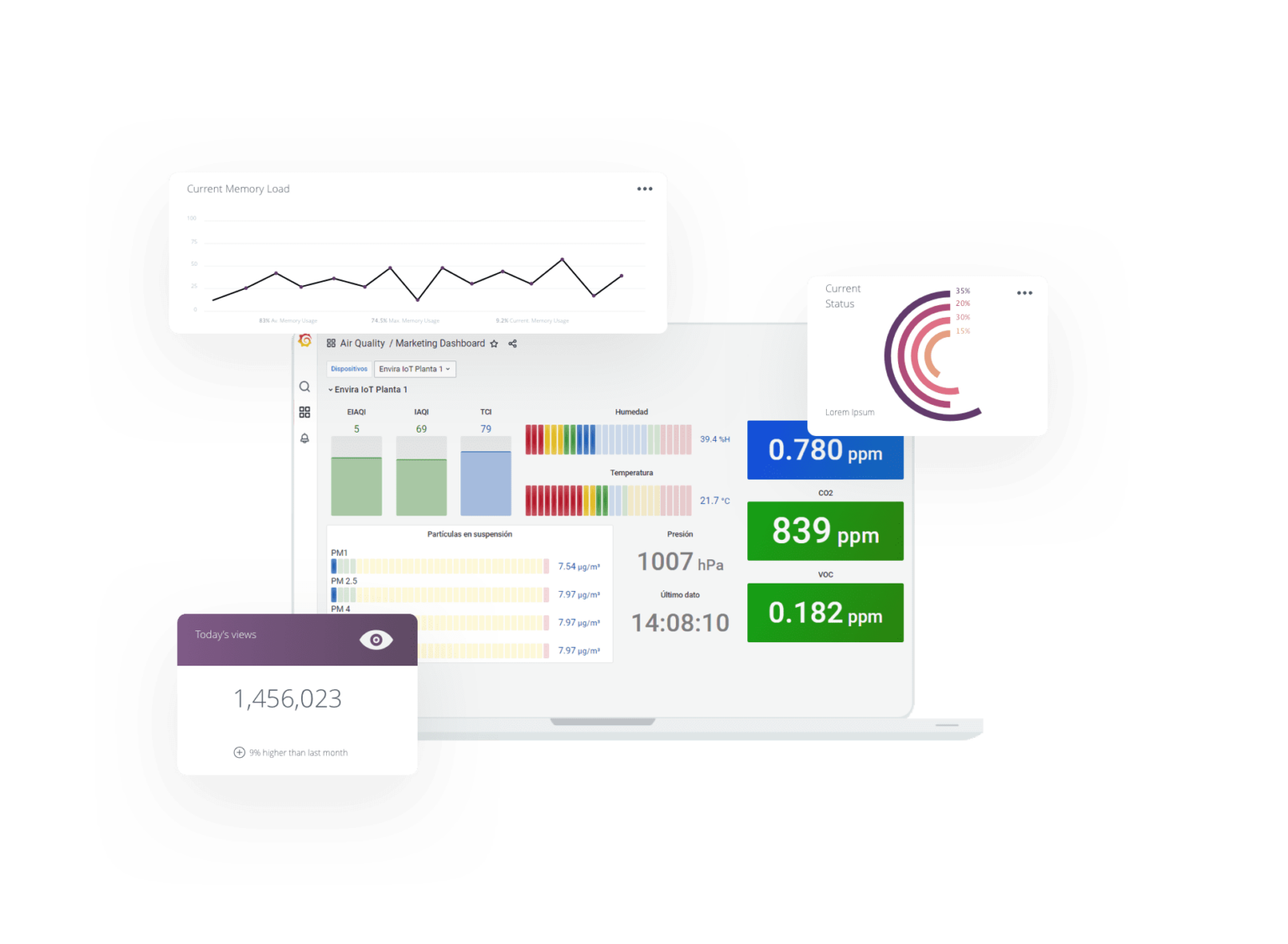
In addition, air quality data can be integrated directly into your own PropTech applications or customised dashboards for global asset monitoring.
Having real-time data allows managers, investors and facility managers to make proactive and automated decisions based on accurate, up-to-the-second information, from climate control management to communication with occupants.
Monitoring indoor air quality (IAQ) is not only an investment in health and comfort, it also has a direct impact on the building’s profitability.
Energy savings
Adjusting ventilation and air conditioning to the actual occupancy of the building prevents over-ventilation and reduces electricity consumption.
Predictive maintenance
Detecting anomalies in IAQ parameters allows you to anticipate ventilation or filtration problems, preventing serious breakdowns and extending the useful life of your equipment.
Higher return on investment
Reducing consumption and technical incidents means lower overall operating costs and, therefore, a higher return on investment (ROI).
Yes, Nanoenvi IAQ features the standard MQTT protocol, allowing for direct integration with air conditioning and ventilation systems and PropTech management platforms.
Nanoenvi IAQ contributes to obtaining credits in sustainable certifications such as LEED v5, WELL v2, BREEAM and Fitwel, as well as having RESET accreditation, which guarantees data reliability.
IAQ monitoring increases the market value of the asset, facilitates access to green financing and improves occupancy rates.
It adapts to both cases. Thanks to its compact design and wireless connectivity, Nanoenvi IAQ is ideal for integration into energy renovation or digitalisation projects in existing buildings.
In addition to its accuracy and RESET accreditation, it is specifically designed for integration into Smart Buildings, with open protocols, scalability and support for PropTech platforms, making it a device of high strategic value for property management.
Do you want to know more about Indoor Air Quality Monitoring System for Smart Buildings?