More information
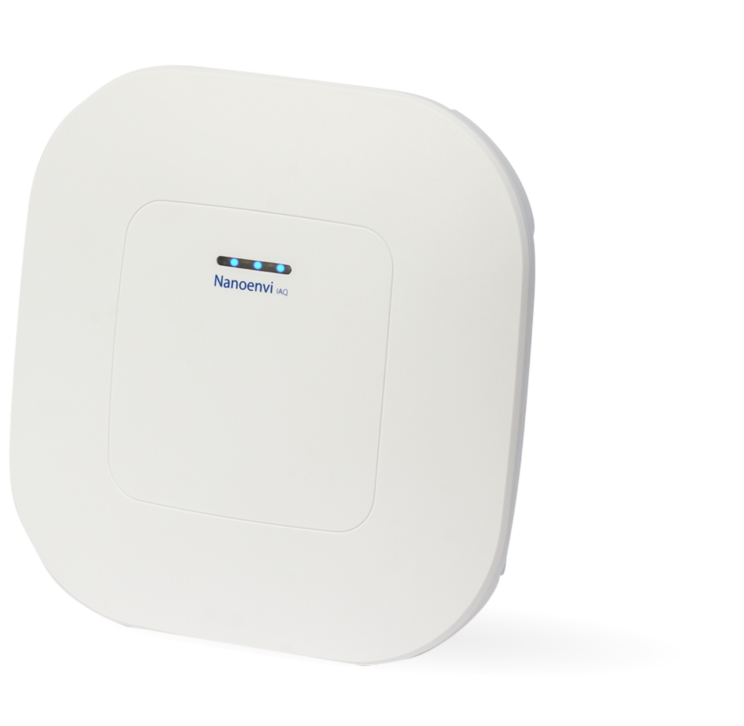
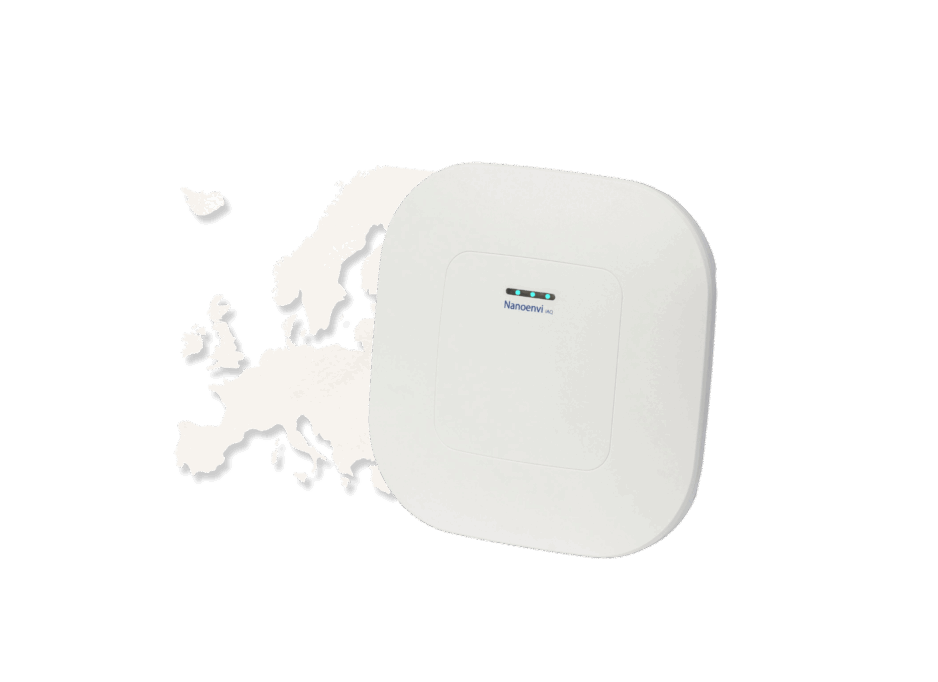
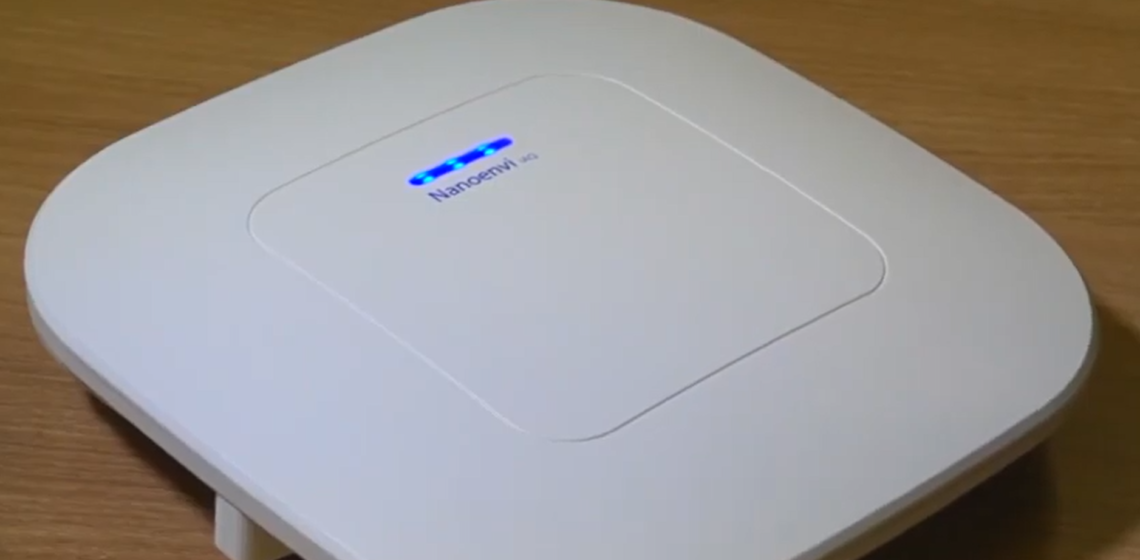
Nanoenvi IAQ is an indoor air quality monitor that protects your health, helps you save money and contributes to the preservation of optimal conditions in indoor environments.

Healthy environment

Savings costs and efficiency

Prevents allergies

Improves ventilation

7 sensors in 1

AQI indicator
Control the quality of the air you breathe
Indoor air quality directly influences people's health, comfort and performance. Using an indoor air quality monitor, such as Nanoenvi IAQ, provides real-time information on the levels of invisible pollutants that affect well-being in offices, schools, hospitals and public buildings.
The IAQ sensors integrated into these devices detect key parameters such as CO₂, volatile organic compounds (VOCs), particulate matter (PM2.5 and PM10), temperature and humidity, among others. Thanks to this information, it is possible to anticipate risky situations, optimise ventilation and ensure compliance with regulations such as RITE or WHO recommendations.
Having a smart air quality device not only improves the experience of occupants, but also contributes to energy efficiency and more responsible environmental management. In workplaces, for example, good indoor air quality can reduce absenteeism and improve productivity.
In short, measuring indoor air quality is an investment in health, safety and sustainability.
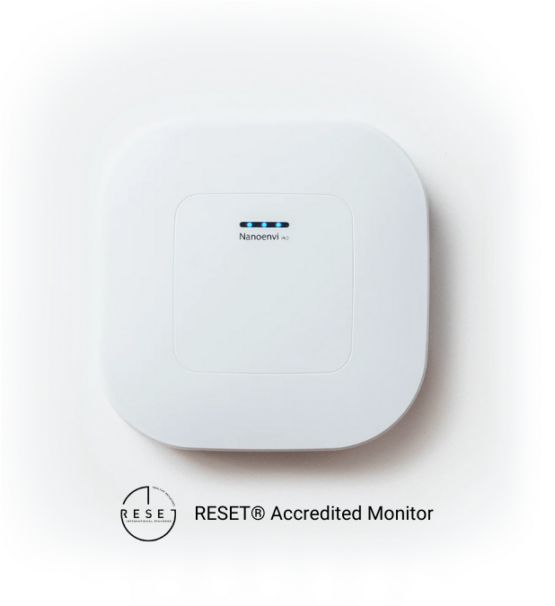
Nanoenvi IAQ is RESET® certified and uses the most accurate, high-definition sensors on the market to monitor up to seven environmental factors that affect human health, including CO₂, VOCs and suspended particles














CO2
As more people occupy a space, carbon dioxide levels increase and there is less fresh air. Indoor exposure to this gas can affect performance and decision making and can also lead to headaches, restlessness and drowsiness. That is why it is important to act when its levels soar in work environments, schools, hospitality and fitness centers, either by reducing the number of occupants in a room or by increasing the ventilation rate (natural or mechanical). Nanoenvi IAQ uses a highly stable and accurate NDIR sensor with self-calibration capability for CO2 measurement.

VOC
Volatile organic compounds are toxins released by chemical products (cleaning and disinfection products, paints, varnishes, waxes, cosmetics, perfumes, deodorants, air fresheners, etc.). VOCs can cause serious short- and long-term health effects, from minor eye, nose, and throat irritations to liver and kidney problems. If VOC levels increase, it is advisable to increase ventilation or open windows to improve indoor air quality.

PM (1, 2.5, 4 and 10)
Suspended particles, also known as Particulate Matter (PM 1, 2.5, 4 and 10), are made up of a range of dust, dirt and liquid particles that are suspended in the air. Dust, fungi, bacteria, pollen are examples of particulate sources. The smaller and more invisible they are (such as PM 1 or 2.5), the more harmful they are to health, because they can be inhaled and penetrate deep into the respiratory system, causing everything from problems such as asthma and allergies to cancerous diseases. PM particles can remain in the atmosphere for quite some time and are freely transported by air currents. If these are released by a cough or sneeze, they can cause viral or bacterial infections. High levels of PM may indicate the need to use air filters or check HVAC system filters to mitigate exposure.

CO
Carbon monoxide is present in ambient air when fuel or other carbon-based materials are in contact. Short-term exposure can cause dizziness or headaches, and long-term exposure can lead to respiratory illnesses. Vehicles, gas stoves, barbecues, generators, and poorly maintained ventilation equipment are the most common sources of CO indoors.

Temperature
Optimum temperature conditions range between 20ºC and 23ºC. Any temperature above that can result in causing mental fatigue and affect performance and productivity. On the other hand, low temperatures can weaken the immune system and help the spread of viruses. Real-time monitoring of the temperature will allow you to make decisions such as adjusting the thermostat of the cooling system or deciding if it is necessary to open or close windows.
Humidity
Indoors, humidity can be increased by deteriorating construction materials in buildings, water damage, and poor plumbing systems. It is recommended to always maintain relative humidity levels indoors between 40% and 60% to enjoy a healthy space and prevent the spread of viruses. Low relative humidity levels can affect performance and cause dry skin and eczema. Conversely, high humidity levels contribute to the growth of mold and consequently increase the risk of asthma, allergies, and respiratory diseases.
Atmospheric pressure
Atmospheric pressure is related to air flows causing bacteria, dust, and other airborne contaminants. If the air pressure inside an indoor space is lower than outside, the pollution in the room does not flow into the surrounding areas. Higher pressure within an interior room will prevent contaminants from entering.

Smarter, safer indoor spaces
Indoor air quality has a huge impact on health and wellbeing. Prioritise the creation of healthy, smart and safe indoor environments in all types of spaces, and find out how the Nanoenvi IAQ sensor can help you achieve this.
Hospitals
In hospitals, air is the major vehicle for the transmission of microorganisms. For nosocomial infection (infection that the patient acquires in the hospital), the combination of a pathogenic microorganism and a vehicle that serves as a transport to the patient, is necessary.
Nanoenvi IAQ measures these risks automatically and by zones in the hospitals through different air parameters that it sends to a web platform and allows to generate alerts to be sent automatically to the hospital managers.

Fertility Clinics
In fertility clinics, where there are critical spaces such as embryology laboratories, andrology or even operating rooms, it is essential to maintain optimal sterile conditions free of any embryotoxic risk.
VOCs (Volatile Organic Compounds) and other parameters such as temperature, humidity or particulate matter can endanger the implantation and viability of embryos.
Nanoenvi IAQ monitors indoor air quality every 30 seconds, 24/7, issuing alerts in case preset limits of any parameter are exceeded.

Workspaces
Poor air quality, with high concentrations of CO₂, is a silent enemy of productivity. Known as ‘Sick Building Syndrome’, it causes fatigue, headaches and a noticeable decrease in cognitive performance.
Implementing Nanoenvi IAQ transforms workspaces into healthy environments that promote well-being.
Continuous monitoring not only helps to reduce absenteeism and retain talent, but also optimises ventilation systems to improve energy efficiency.

Smart Buildings and PropTech
Sustainable architecture and LEED, WELL and BREEAM building certifications all have air quality as a fundamental pillar of health.
Nanoenvi IAQ integrates seamlessly with Building Management Systems (BMS), becoming a key sensor that provides the necessary air quality data in smart buildings.
This information allows Proptech platforms to not only optimise ventilation and air conditioning in real time, increasing the value of the property asset and improving the user experience.
Urban transport
Inside public transport vehicles, high passenger density and poor ventilation can cause a rapid increase in CO₂ levels and bioaerosol concentration.
Nanoenvi IAQ offers transport operators a vital tool for ensuring passenger safety and comfort by monitoring air quality in real time and efficiently managing ventilation systems.

Gyms
Gyms and sports centres often have high levels of CO₂, PM and VOCs, which make it difficult for athletes to breathe. A stuffy environment has a direct impact on physiological function during sports and causes complaints from users.
The Nanoenvi IAQ indoor air quality meter contributes to improved athletic performance and ventilation and air renewal strategies to ensure a healthy environment conducive to exercise.

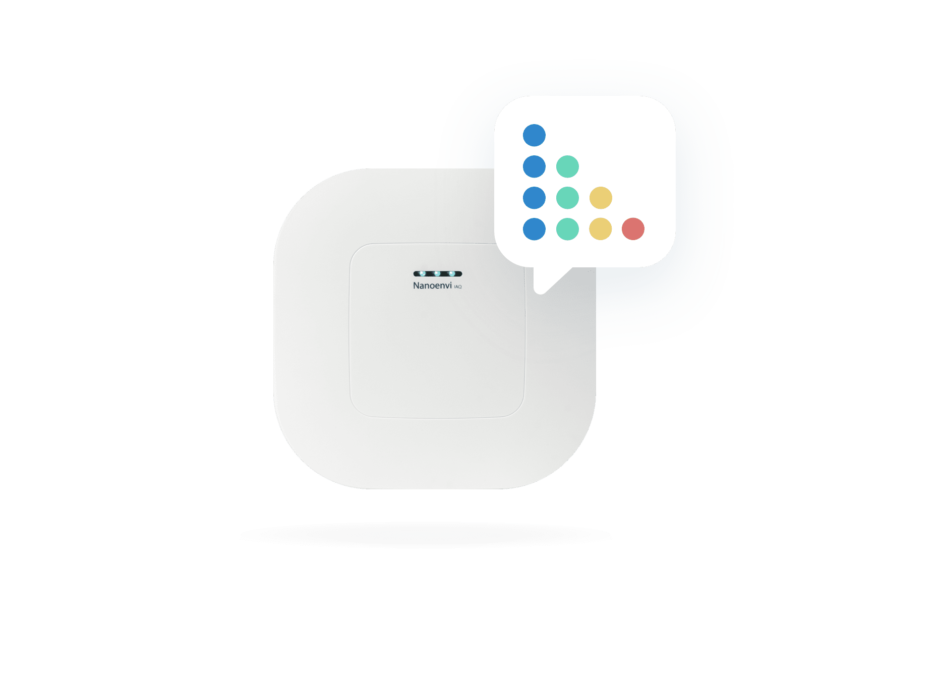
With Nanoenvi IAQ, users can see what the Ambient Indoor Air Quality Index (AQI) is like at a glance thanks to a color code.
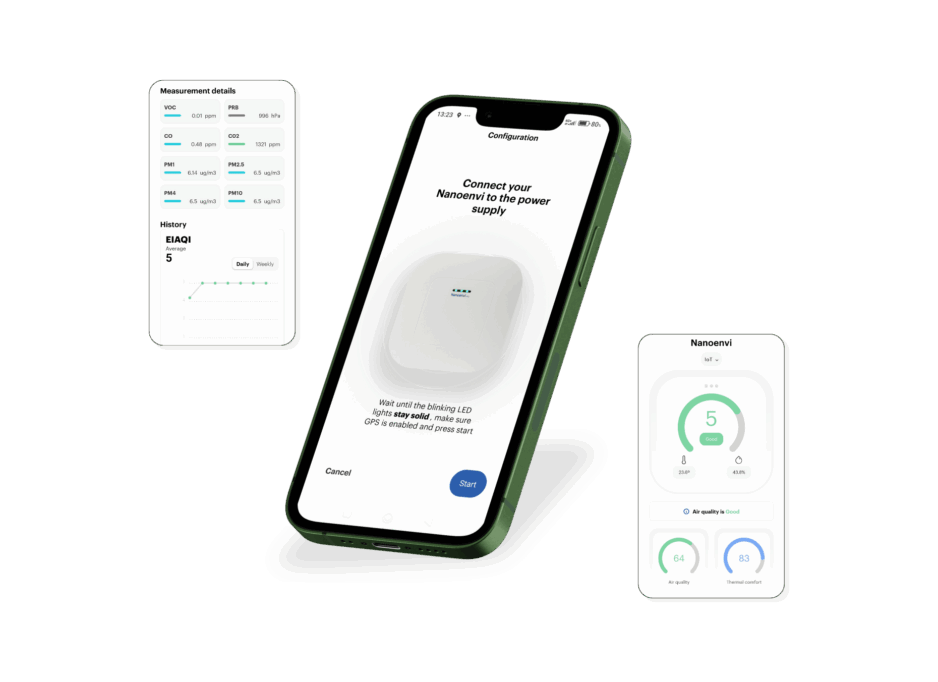
This app allows you to:
Configure the Nanoenvi IAQ device quickly, easily and intuitively thanks to its official Android app, without the need for advanced technical knowledge.
This app allows you to:
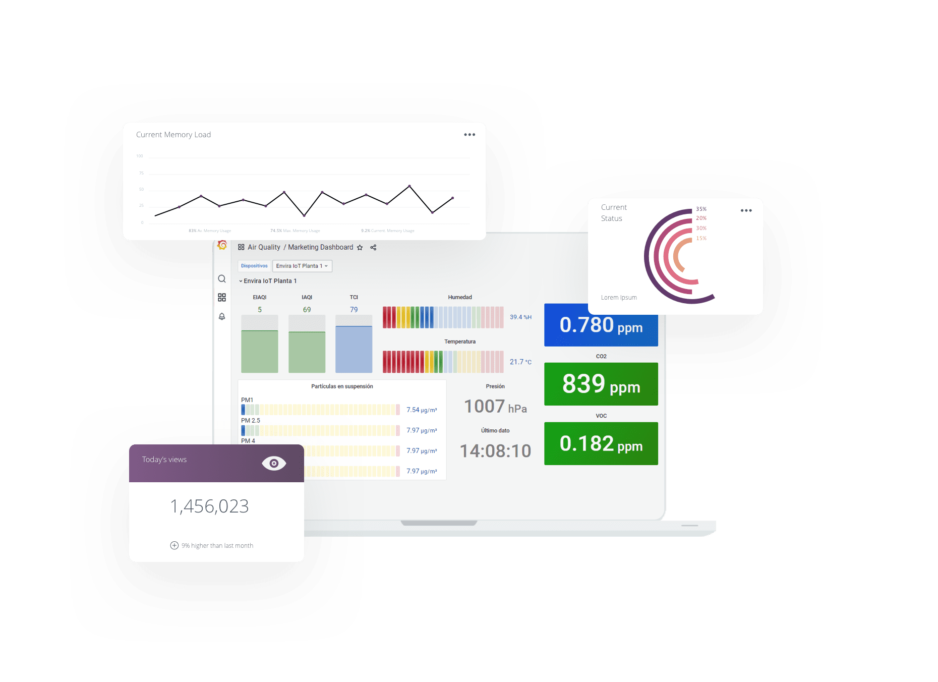
Manage and analyze air quality data at a glance with access to advanced trends and analytics.
Nanoenvi’s dashboard provides a quick and easy solution to view, compare and export data to manage air quality. The objective of the platform is to transform information into knowledge so that facility managers can easily identify and address any air quality issues and make the best decisions.
The dashboard is made up of different modules that summarize the data collected by each of the sensors and show analytics of their levels. In addition, it also calculates the ambient indoor air quality index (AQI) and the thermal comfort index (CT).
Go deeper and get more detailed information by changing the historical display (last hours, weeks, months or a year)

Own manufacturing
Nanoenvi IAQ is an own development of ENVIRA. The equipment is entirely manufactured in its official facilities and its sensors are calibrated one by one in an accredited calibration laboratory. Nanoenvi IAQ is backed by engineering support, repair and/or replacement service, and remote software updates.

Easy integration
Nanoenvi IAQ is a device that takes only minutes to install and is characterized by its ease of integration and support. The MQTT protocol allows each customer to decide how they want to exploit the data, with the possibility of configuring it against their own platform.

Know-how ENVIRA
Developed by an engineering team with more than 35 years of experience in the design, integration and commissioning of systems for measuring environmental quality and polluting emissions.

RESET® Standard
The Nanoenvi IAQ monitor has met all the objectives to obtain RESET AIR certification, so the sensor is accredited and certified to monitor indoor air quality in RESET projects.


Specific sensors and monitors are used to evaluate indoor air quality, analysing at least the following key parameters:
These devices collect data in real time and allow for an assessment of whether the environment is healthy and meets the required values.
Some signs of poor indoor air quality include strong odours, stuffy air, frequent headaches, fatigue, eye or throat irritation, and respiratory problems.
High levels of CO₂, fine particles, or VOCs detected by an IAQ meter can confirm poor indoor air quality.
According to the World Health Organisation (WHO), the annual average for PM2.5 particles should not exceed 15 µg/m³ and the daily average should not exceed 15 µg/m³. Exceeding these values increases the risk of respiratory conditions, allergies and cardiovascular diseases.
It depends on the environment, but generally a total VOC level below 300 µg/m³ is considered safe indoors. Values between 300 and 500 µg/m³ suggest the need to improve ventilation and reduce emission sources. Above 500 µg/m³, immediate action is recommended to avoid health risks.
For accurate readings, it is advisable to place the air quality meter at a height of approximately 1 to 1.5 metres, away from doors, windows and heat sources. This ensures that the measurements accurately reflect the indoor environment.
A professional meter, such as the Nanoenvi IAQ, offers high-precision sensors, monitoring of multiple parameters, integration with different platforms via the MQTT protocol, and configurable alerts. By contrast, domestic meters tend to be less precise and functional, and are designed for basic use.



3-5-720/ 503 & 504,
Tirumala Sunbridge House,
Water Tank Road, Vittalwadi,Naryanaguda,
Hyderabad-500 029, TELANGANA,
INDIA
3/18 Powers Rd, Seven Hills NSW 2147,
Australia
Unit 33 Chancery Gate, Milton Keynes, MK1 1EQ
Am Eikborn 26
37079 Göttingen
Germany
R. Laurentino José do Prado, 183Parque Res. Jundiaí,
Jundiaí – SP, 13212-496,
Brasil
Avda. Cortes Valencianas, 43A -D1. Valencia 46015 (Valencia), España
Calle Granados 6, 3ºD, 33011 Oviedo, Asturias
Sensors
Carbon Monoxide (CO)
Precision ±5%
Measuring range 0 ~ 5000 ppm
Volatic Organic Compounds (VOCs)
Precision ±15% over value
Measuring range 0 ~ 60000 ppb
Particulate Matter (PM1.5, PM2.5)
Precision ±10 μg/m3
Measuring range 0 ~1000 μg/m3
Particulate Matter (PM4, PM10)
Precision ±25 μg/m3
Measuring range 0 ~1000 μg/m3
Carbon Dioxide (CO2)
Precision ± 30 ppm
Measuring range 0 ~ 40000 ppm
Temperature
Precision ±0.02 ºC
Measuring range 0 ~65 ºC
Reletive humidity
Precision ±2 %
Measuring range 10 ~95 %
Pressure
Precision ±10 hPa
Measuring range 500 hPa a 1150 hPa
Communications
Wifi
LoRaWan
Power supply
Voltage and current
5V DC (including external power supply, Input: 100-240V AC @ 50-60 Hz, Outpur 5V DC - 1A)
Maximum Current
2,5 W
Data protocol
MQTT
Device start-up via HTTP
OTA update download via HTTP
Remote configuration via JSON-RPC over MQTT
To use the Nanoenvi IAQ indoor air quality measuring device, all you need is a power supply, a WiFi network and a smartphone, tablet or PC.
Nanoenvi IAQ™ is designed for quick and easy installation. It has two operating modes: configuration and communication. When the device is installed, it starts in configuration mode: it creates a WiFi network and generates a web page to configure the WiFi network and the MQTT broker to which it will connect when in communication mode to send measurement data.
This way, Nanoenvi IAQ™ can be configured from a smartphone or PC. Once configured and installed, it will start operating in communication mode: it will continuously measure air quality and you will no longer need to worry about the device.
Although it is not necessary to install the Nanoenvi IAQ application, it is highly recommended to facilitate the initial configuration of the device, as well as for the management and consultation of the data collected by the indoor air quality monitoring devices.
However, for users who wish to own the collected data and use it for their own purposes, Nanoenvi IAQ uses the MQTT protocol, a standard and widely used data transmission protocol that allows you to decide where the data will be sent at the time of installation by configuring an MQTT server.
At Nanoenvi IAQ, we respect your right to control your personal data. If you wish to delete your account and all data associated with it, you can do so at any time by sending your request by email to DPDASTURIAS@PRODAT.ES with the subject line: ‘Request to delete Nanoenvi IAQ App account’.
What will be deleted?
When you delete your account, we will permanently delete:
Data retention due to legal obligation
In some cases, we may be required to retain certain data for a specified period for legal compliance, security or fraud prevention reasons, as set out in our Privacy Policy.
Nanoenvi IAQ does not require any specific maintenance. In addition, it implements configuration messages that allow to know the status of the device, perform software updates or change its configuration remotely. In this way, building managers or integrators can have control over the installed devices without travel or cost overruns.
When Nanoenvi IAQ is measuring and sending data, the color of the lights varies depending on the air quality. By default, this color is obtained from an air quality index calculated by the device. This calculation is implemented based on an algorithm developed by ENVIRA based on empirical studies by the company and different universities and air quality regulatory agencies. The algorithm weights gas concentrations, temperature and humidity with different weights.
The three indices that Nanoenvi IAQ calculates are:
In principle it is not necessary. The device implements state-of-the-art calibration algorithms. However, you can request a quotation if you require additional calibration.
It depends on the type of space and the application: each Nanoenvi IAQ is a sampling point, so the higher the number of sampling points, the higher the resolution and the more knowledge you will have about the air quality. It is up to the user or the installer (Senior Indoor Air Quality Technician) to determine how many sampling points they need. Some installers prefer to adhere to UNE 171330-2 (Indoor Air Quality, Part 2), others prefer to increase the number of sampling points in crowded places such as offices, meeting rooms, etc. On the other hand, certification standards such as WELL establish their own criteria for the number of sampling points and their placement. Ultimately, the number of Nanoenvi IAQ devices must be determined by the user or installer.
Each Nanoenvi IAQ includes: