More information
Certified solution designed to offer continuous, real-time air quality monitoring for the demanding environment of public transport fleets.

Enhanced comfort

Safer environment

Real-time monitoring

Automatic alerts

Plug & Play

Efficient ventilation
Public transport is essential for urban mobility, but the air quality within vehicles and stations -buses, underground, trains and trams- can often be significantly poorer than outside. High concentrations of particulate Matter (PM2.5, PM10), Volatile Organic Compounds (VOCs) and CO2 pose a direct health risk to millions of passengers and staff every day.
For transport operators and authorities, ensuring a safe and healthy environment is not just a responsibility: it’s a critical component of service quality, operational excellence and regulatory compliance.
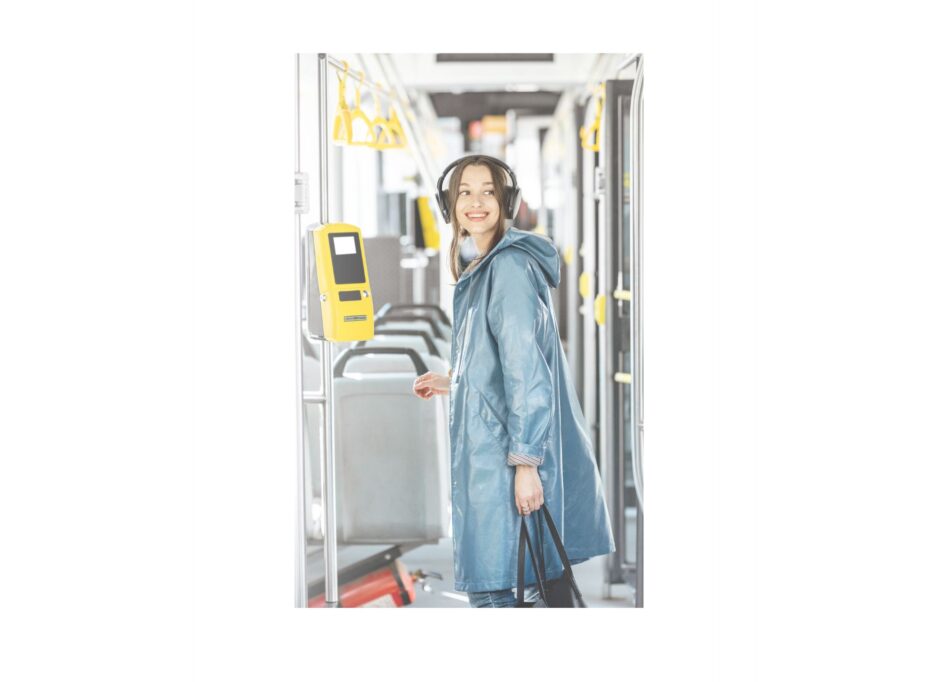
Poor Indoor Air Quality (IAQ) on public transport is linked to a range of health issues, from asthma and allergies to more severe respiratory and cardiovascular conditions.
Furthermore, high CO2 levels, indicateive of poor ventilation, can lead to drowsiness and discomfort, impacting passenger experience and driver alertness.
In addition, other pollutants such as airborne particles from outside and volatile organic compounds emitted by personal hygiene products (among others) cause undesirable effects such as headaches and a feeling of ‘stale air’, not to mention the increased likelihood of virus transmission via aerosols.
Optimising ventilation and creating a more pleasant, safer, odour-free indoor environment with a greater feeling of freshness directly translates into a better assessment of the service by the user.
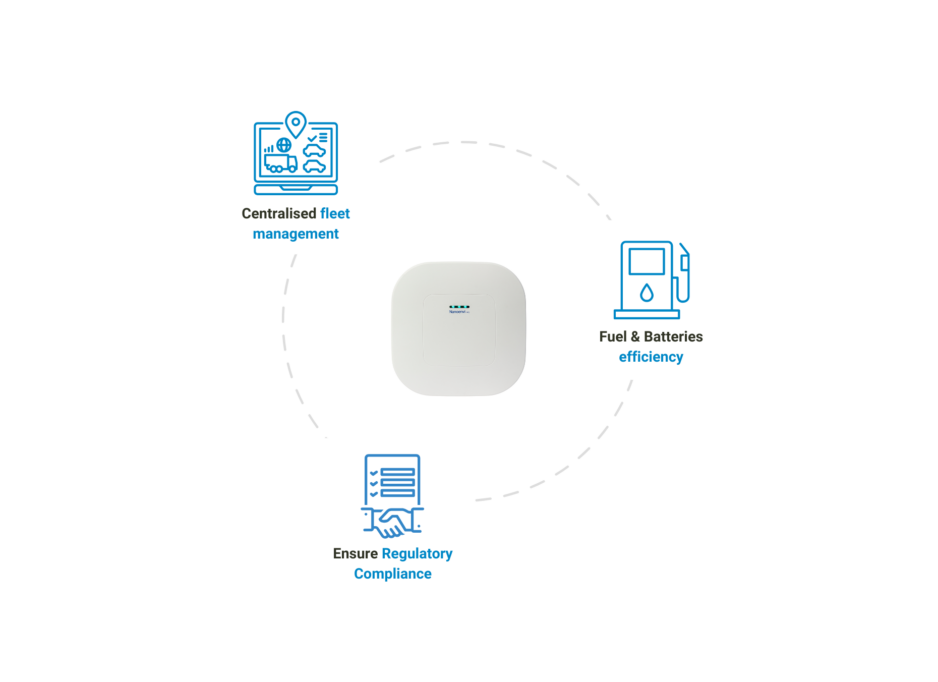
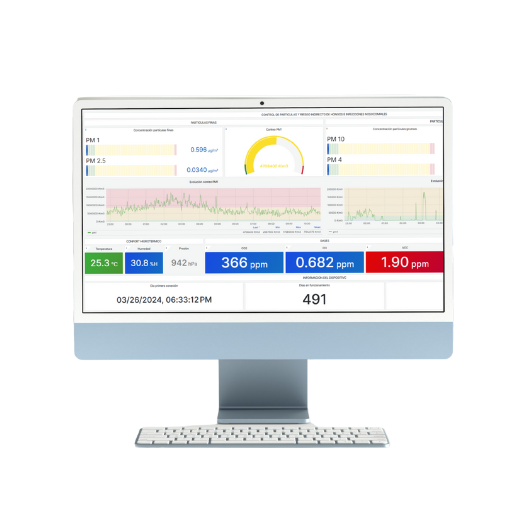
The air quality data of each vehicle is received in real time on a single platform, allowing fleet managers to identify problems remotely, compare performance between vehicles, and apply uniform ventilation policies.
In addition, adapting ventilation or air conditioning to the actual occupancy of the vehicle reduces the load on the engine or batteries, reducing fuel consumption or increasing range in the case of electric vehicles.
In terms of tenders, more and more public transport specifications include specific clauses on air quality and ventilation. Using a professional CAI monitoring system allows you to comply with the specifications and earn additional technical points.

Carbon Dioxide and Monoxide
In vehicles and tunnels with a high density of passengers, CO2 levels rise rapidly, causing drowsiness, headaches and a greater perception of ‘stale air’ for both drivers and passengers.

Particulate Matter PM
Particulate matter from outdoor pollution, such as brake dust and diesel smoke, accumulates inside vehicles and stations. These fine particles are the ideal vehicle for the transmission of aerosols, posing a direct risk to respiratory and cardiovascular health.

Volatile Organic Compounds
Interior materials, cleaning products, and passengers' personal hygiene products emit volatile organic compounds (VOCs) that can cause eye and throat irritation, as well as unpleasant odours.

Temperature & Humidity
Temperature and humidity have a direct and measurable impact on passenger comfort. Avoiding the feeling of stuffiness or dryness is key to user satisfaction, reducing complaints and fostering loyalty.
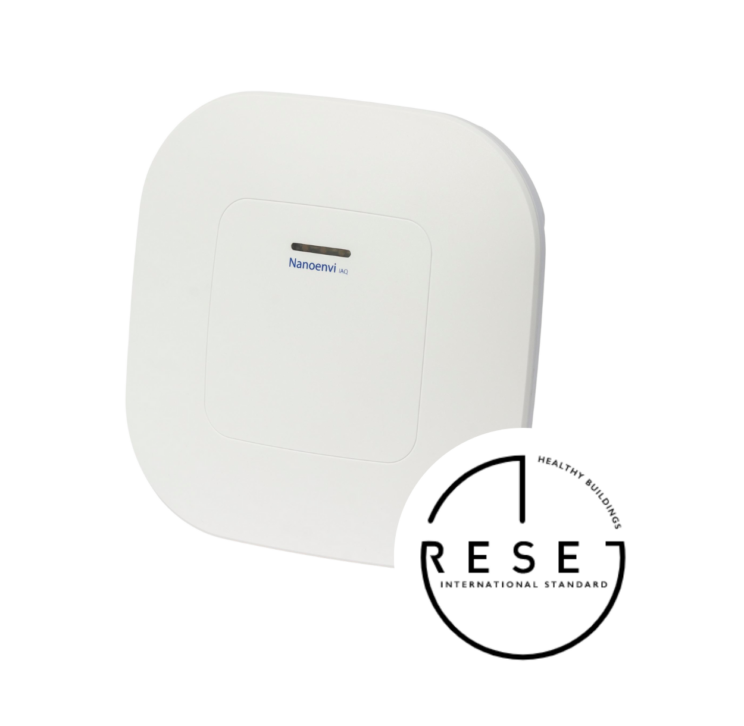
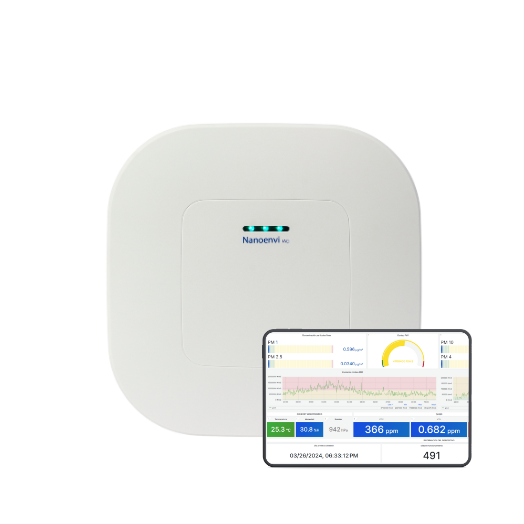
The Nanoenvi IAQ monitoring system has been designed to provide accurate, continuous, real-time measurement of the main parameters that affect indoor air quality in the transport sector, both in vehicle fleets and in terminals or stations. Its advanced IoT sensor technology detects invisible pollutants that directly affect the health and comfort of the occupants of these spaces.
Data accessible to all users
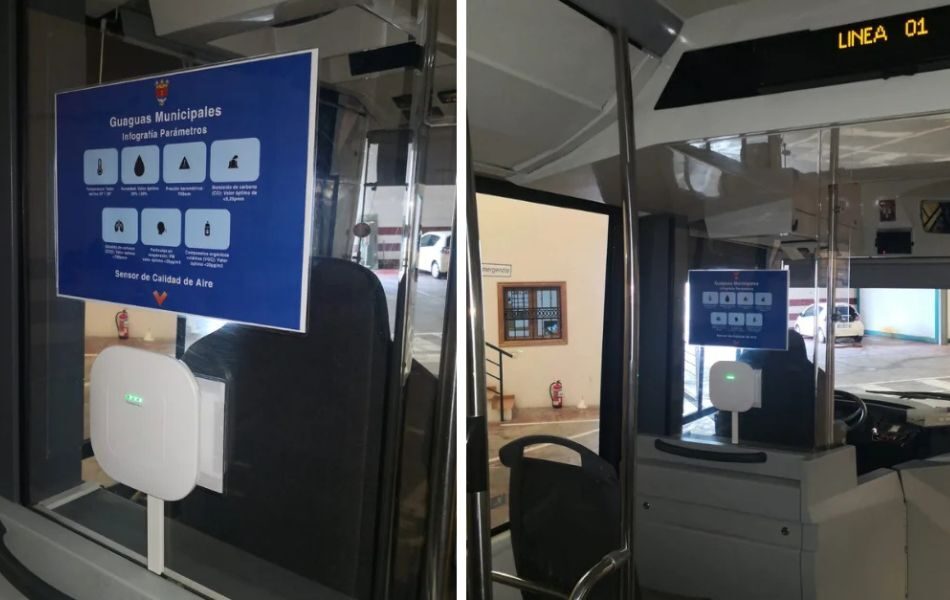
Our compact sensor, installed discreetly within the vehicle, continuously analyses the cabin’s air.
The data collected is integrated into a multi-device, multi-user data visualisation platform: all you need is a device with internet access to find out the air quality in real time.
Having data accessible to everyone represents a proactive commitment to transparency and well-being for transport service users, which is essential in public tenders and bids.
In addition, this platform allows for the automatic sending of alerts, enabling fleet managers to identify problems remotely and carry out preventive maintenance.
Nanoenvi IAQ, pioneers in IAQ monitoring in public transport
Lanzarote’s fleet of public buses has been a pioneer in Spain in installing monitoring systems to assess air quality inside this means of transport.
Thanks to IoT sensors installed in bus cabins, parameters such as carbon dioxide (CO2), carbon monoxide (CO), PM 2.5 and PM 10 particles, volatile organic compounds (VOCs), temperature, humidity and atmospheric pressure are measured in real time.
Air quality in enclosed spaces such as buses, underground wagons, or trains has a direct impact on the health and comfort of passengers and staff. Continuous monitoring reduces the risk of virus transmission via aerosols, prevents drowsiness and the feeling of stale air, and improves the perception of safety and cleanliness of the service.
The Nanoenvi IAQ monitors the most critical parameters for indoor air quality in real time:
For fleet managers, it enables ventilation systems to be optimised according to occupancy levels, resulting in fuel savings or increased range for electric vehicles.
Thanks to customised alerts and data monitoring, preventive maintenance can be carried out, resulting in cost savings.
It also facilitates access to public tenders and helps to achieve points for technical improvements.
It also improves user satisfaction and confidence, resulting in greater loyalty.
No, Nanoenvi IAQ is a plug-and-play solution. This means that it is easy to install and does not require complicated integration techniques for vehicle fleets.
The data is displayed in real time via an online platform that can be accessed from any device (mobile phone, tablet or computer) by multiple users.
This platform gives fleet managers centralised control of all monitored vehicles.
Do you want to know more about Real-Time Air Quality Monitor for Public Transport?