solutions
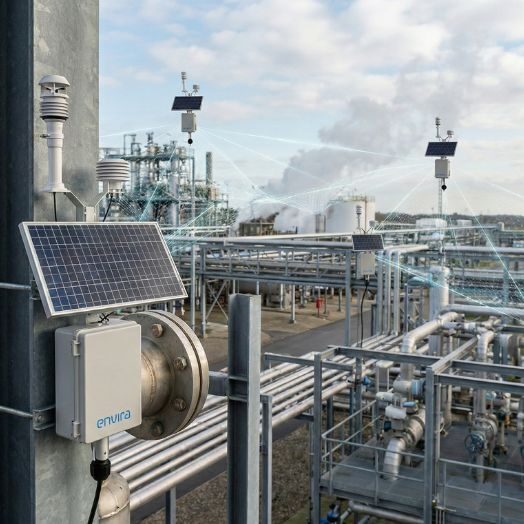
In the petrochemical, chemical and refining industries, not having continuous control of leaks and diffuse emissions – both fugitive emissions and venting – generates significant economic losses and safety risks for plant operators.
Periodic manual LDAR (Leak Detection and Repair) inspections, although still the most common technique, fall short when it comes to true intelligent early detection: only real-time monitoring of leaks and fugitive emissions directly in the process units allows proactive action to be taken, protecting assets and maximising operational efficiency.
Proactive plant security
Detects dangerous concentrations of gases or VOCs in passageways, pumps and compressors before they reach explosive or toxic levels for operators.
Loss reduction and downtime
Every minute that a leak goes unnoticed is product that evaporates. Real-time detection drastically minimises unaccounted-for product losses.
LDAR campaign optimisation
The continuous, real-time monitoring system indicates where the anomaly is, directing repair efforts (LDAR technique) accurately and efficiently.
Complete control over processes
It integrates the data sent by the monitoring sensors into the control system and identifies whether there are any operations causing peaks in diffuse emissions.
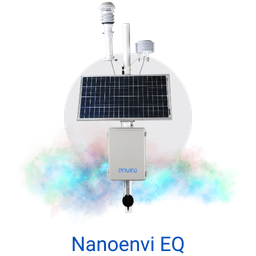
Its compact and autonomous design allows it to be installed inside the process unit or venting systems, close to potential emission sources.
Create high-density leak detection grids within the industrial plant.
This facilitates:
Traditional management of fugitive emissions and venting is based on a ‘snapshot’ approach: manual inspections that certify the condition of a flange or valve at a specific point in time. However, the dynamic reality of an industrial plant shows every day that a continuous view is the most intelligent and optimal approach.
Furthermore, the entry into force of Regulation (EU) 2024/1787 on methane emissions in the energy sector requires empirical measurement of methane at source and prohibits routine venting and flaring, allowing it only as a last resort.
| Criteria | Standard LDAR | Continuous monitoring system Nanoenvi EQ |
| Detection frequency | Periodic (monthly/quarterly) | Continuous 24/7 |
| Reaction time | Days to weeks | Minutes |
| Compliance with Regulation 2024/1787 | Partial | Total |
| Predictive maintenance | No | Yes (trend analysis) |
The continuous monitoring and early warning system integrates a data visualisation and management platform accessible from any device with an internet connection.
This platform allows continuous, real-time visualisation of pollutant concentrations and provides an exportable historical data record for preparing reports and analysing trends.
Thanks to the IoT connectivity of Nanoenvi EQ, immediate alerts can be configured, notifying those responsible for the control centre as soon as a deviation in the gas concentrations established for each monitored area is detected.

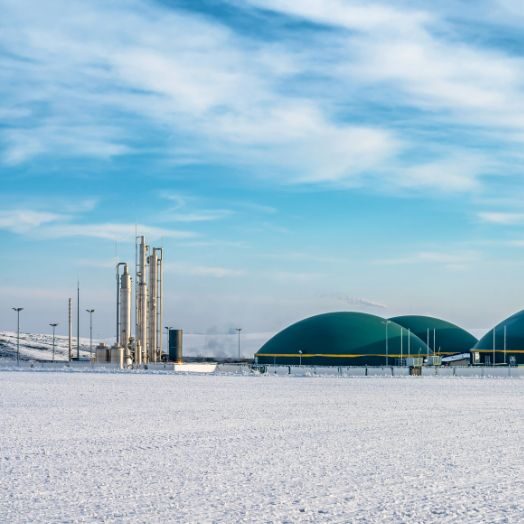
Control of Methane (CH4) Fugitive Emissions: maximum profitability in biogas and biomethane plants
In the biomethane industry, every gram of methane that escapes is a direct loss of revenue.
Fugitive emissions from valves, digester seals or connections in upgrading units represent not only an environmental and safety risk, but also an operational inefficiency that affects plant performance.
Monitoring fugitive emissions ensures that the biogas cleaning process to convert it into biomethane operates at maximum purity, preventing gas from being wasted into the atmosphere.
Improve chemical plant performance by controlling VOC leaks
In the chemical sector, Volatile Organic Compounds (VOCs) are not just waste: they are often expensive solvents or precursors necessary for the synthesis of products.
Evaporation from pump seals, flanges and storage tanks results in tonnes of product lost each year.
Continuous monitoring of TCOVs with Nanoenvi EQ allows leaks to be detected at the outset, preventing them from becoming a significant loss.
Economic impact of fugitive H2S emissions in the paper industry
The Kraft process uses sulphur compounds (H2S) that must be recovered in the cooking cycle, so hydrogen sulphide leaks indicate a loss of efficiency in the recovery boiler.
The robust design of Nanoenvi EQ allows continuous monitoring of H2S near emission sources, helping to close the chemical recovery cycle and saving costs on the purchase of new sulphurous reagents.
Manual LDAR monitoring (periodic inspections) detects leaks at specific times, while continuous monitoring with IoT sensors detects leaks in real time, reducing reaction time from days to minutes and enabling predictive maintenance.
EU Regulation 2024/1787 pursues the 2030 decarbonisation targets by eliminating routine methane venting (with some exceptions) and requiring accurate quantification of methane emissions at source in the energy sector to verify regulatory compliance.
Especially petrochemical, refinery, chemical, and natural gas plants, but any facility with fugitive emissions benefits from early detection.
Nanoenvi EQ provides LDAR technicians with the exact location of anomalies (valves, flanges, etc.). This reduces leak detection time, identifies failure patterns based on historical trends, and optimises resources by enabling targeted and efficient repairs.