- Company
-
Instrumentation and devices
Products
Indoor Air Quality Monitors
IoT devices for continuous real-time monitoring of indoor air quality, including environmental parameters such as CO2, CO, VOCs, Particulate Matter, Temperature, Relative Humidity, Absolute Pressure and Noise.
See more
Discover the indoor air quality monitor Nanoenvi IAQAmbient Air Monitoring Equipment
Gas analysers and particulate matter monitors for real-time monitoring of outdoor air quality and immission. Internationally certified reference equipment.
See more
SO2, SO, H2S, TRS & TS analyzers
NOx, NO, NO2, NH3 analyzers
CO, CO2 & Ozone analyzers
Official distributor of Met One, Teledyne, AMS Analítica, AMA Instruments and Palas.Industrial Emission Analyzers
Automatic systems for real-time monitoring of emissions and industrial processes.
See more
Sulphur dioxide SO2 analyzers
Nitrogen oxides NOx analyzers
Analyzers for exhaust gas CO, CO2, O2...
Opacity Meters for emission monitoring
Authorised distributor forSiemens, Teledyne API, Fives, Ankersmid, M&C & Phoenix Contact.Process sensors
Intelligent sensors for real-time monitoring and control of industrial processes.
See moreContinuous Ambient Air Quality Monitoring Systems
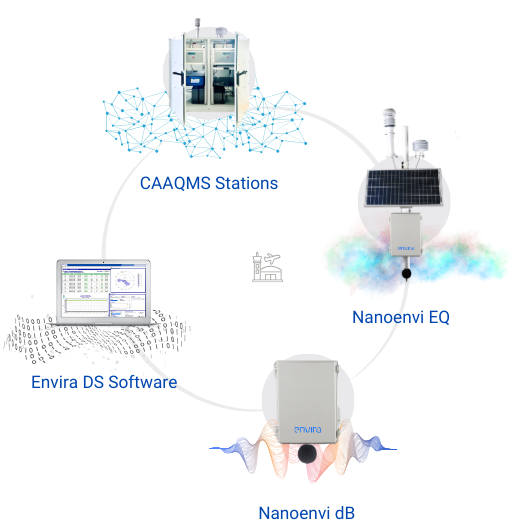
Design, manufacture and installation of ambient air quality monitoring and control stations. Our different solutions are adapted to all areas and needs:
See more
Fixed, reference CAAQMS stations
Compact AQMS stations
Mobile AQMS stations
Portable stationsMeteorological sensors
We have a wide selection of high-precision sensors and instrumentation for measuring meteorological parameters:
See more
Wind speed and direction sensors
Temperature sensors
Moisture meters
Atmospheric pressure gauges
Solar radiation sensors
Rain gaugesContinuous water monitoring equipment
We design continuous water quality monitoring systems.
See more
Turbidity, conductivity, salinity and suspended solids meters.
Sensors for pH, Redox, Dissolved Oxygen.
Sensors for Free Chlorine, Total Chlorine, Ammonia, Alkalinity and other chemical parameters. - Environmental Software
-
Services
Services
Services
Services
Services
Services
Services
Services
Services
Services
- Sectorial solutions
- Blog
- Careers
- Contact