en
es en
Phone +34 985 73 39 52

AUTOMATIC WEATHER STATIONS (AWS)

Professional multi-parameter weather station

Nanoenvi MET is an IoT weather station that autonomously and autonomously measures multiple climate parameters in any outdoor environment using a single compact and portable device.s.

Home » Instrumentation and Monitoring Equipment » Meteorological sensors » Professional multi-parameter weather station

The Nanoenvi MET professional portable outdoor weather station allows you to collect real-time data on atmospheric and climatic conditions in a fully automated manner without requiring direct intervention.

This multi-parameter station measures rainfall, wind, radiation and up to a total of 8 meteorological parameters with IoT sensors, eliminating the mechanical failures of traditional stations.

Its casing, made of ABS, polyurethane, aluminium and stainless steel, guarantees the IP65 protection necessary to withstand rain, dust and intense UV radiation. Its compact design and Plug & Play feature facilitate immediate deployment, and thanks to its different connectivity options (4G, Ethernet, WiFi and LoRaWAN), meteorological data can be collected even from the most remote locations.

Why choosing Nanoenvi MET over other conventional weather stations?

Key benefits of Nanoenvi MET

Ready in minutes

Ready in minutes

With compact, lightweight dimensions and a design intended for plug-and-play installation, these portable weather stations with multiple connectivity options can be installed and deployed in minutes.

Zero maintenance

Zero maintenance

Say goodbye to mechanical maintenance thanks to radar technology for rain and ultrasonic sensors for wind which, unlike rain gauges or anemometers, do not get clogged or break.

High resistance

High resistance

The materials used in the casing of this weather station guarantee its resistance and durability even in the most adverse and unfavourable conditions, with an operating range from -20ºC to 55ºC.

Complete autonomy

Complete autonomy

Thanks to their range of battery and solar panel sizes, these weather stations guarantee total autonomy, even in environments and latitudes where sunlight is scarce.

FEATURES

Nanoenvi MET's IoT technology is fully customisable, offering a choice of meteorological and environmental monitoring parameters and connectivity and power options to suit each project.

Fully configurable

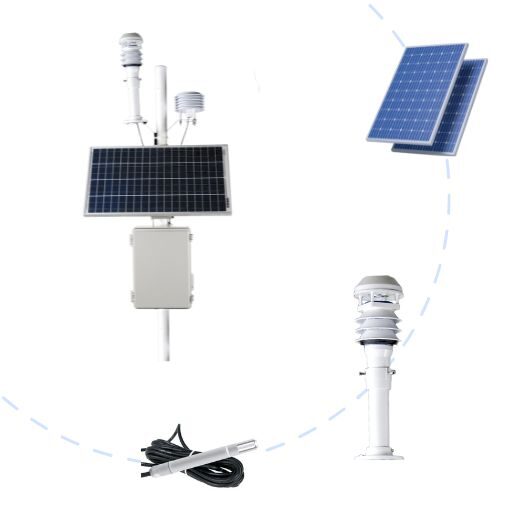
Nanoenvi MET professional weather stations offer the advantage of being able to choose multiple meteorological parameters, configuring the station based on the outdoor environment to be monitored, thanks to the ability to incorporate the specific IoT sensors required by each project:

  • Wind speed
  • Wind direction
  • Precipitation (rain)
  • Solar radiation
  • Temperature
  • Relative humidity
  • Atmospheric pressure
  • Illuminance

Up to 8 meteorological parameters in 1 single device

IoT meteorological sensors allow relevant climate variables to be captured across a wide range of measurements and with maximum precision. Furthermore, as these are solid sensors with a useful life of more than 10 years, mechanical failures and maintenance costs are drastically reduced.

Feature Wind Speed Wind Direction Precipitation (Rain) Solar Radiation Temperature Relative Humidity Atmospheric Pressure Illuminance
Technology Ultrasound Ultrasound Radar Photodiode MEMS MEMS MEMS Photodiode
Range 0 ~ 70 m/s 0 – 359° 0 ~ 200 mm/h 0 ~ 2000 W/m² -40 ~ 60°C 0 ~ 100% HR 100 ~ 1100 hPa 0 ~ 200000 lx
Accuracy ±3% ±3° ±5% ±5% ±0.5°C ±3% HR ±1 hPa ±5%

Multiple connectivity options

Meteorological Station Networks

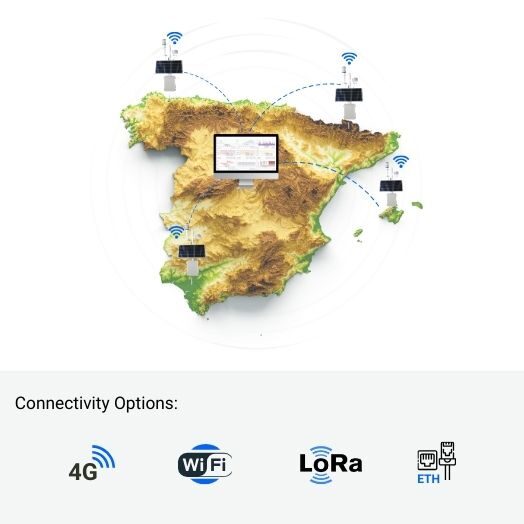
Nanoenvi MET portable devices enable the creation of weather station networks thanks to various M2M communication mechanisms such as 4G, Ethernet, Wi-Fi, and LoRaWAN, facilitating their deployment even in the most remote locations.

In addition, they offer a choice of different power supply options:

  • Solar panel + battery
  • Mains connection + battery
  • Mains connection
  • Power Over Ethernet (POE)
Analysis of meteorological data

Analysis of meteorological data

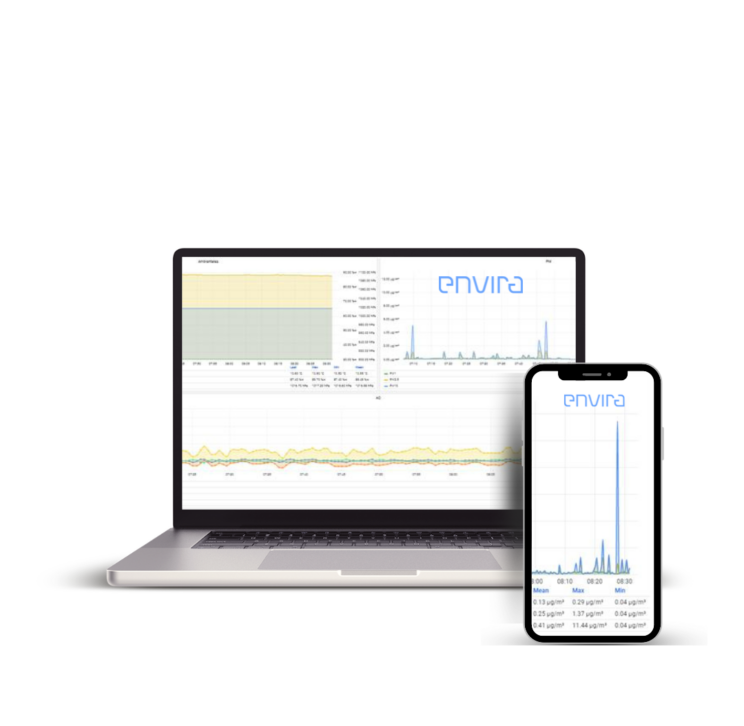
Analyse and control the weather data collected by the stations from any device thanks to the in-house data visualisation platform.

More information

Portable weather station for multiple uses

Solar Thermal Plants

Solar Thermal Plants

Protect the solar field from gusts of wind and optimise predictive maintenance.

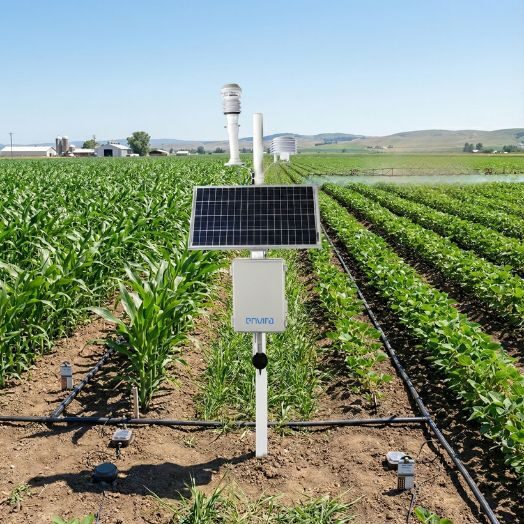
Agricultural IoT

Agricultural IoT

Improve irrigation and pest control decisions by understanding the actual microclimate.

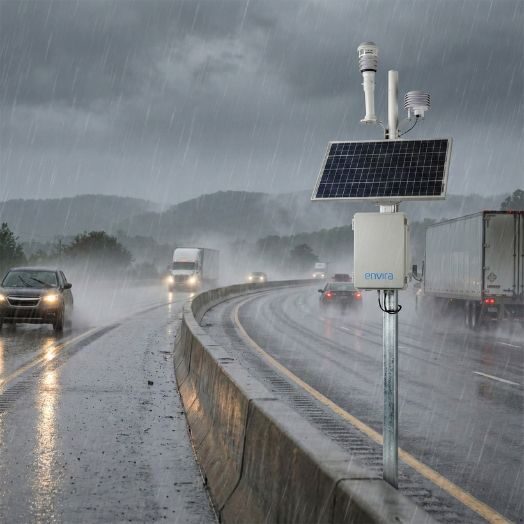
Road safety

Road safety

Improve traffic safety on secondary roads by detecting adverse conditions in real time.

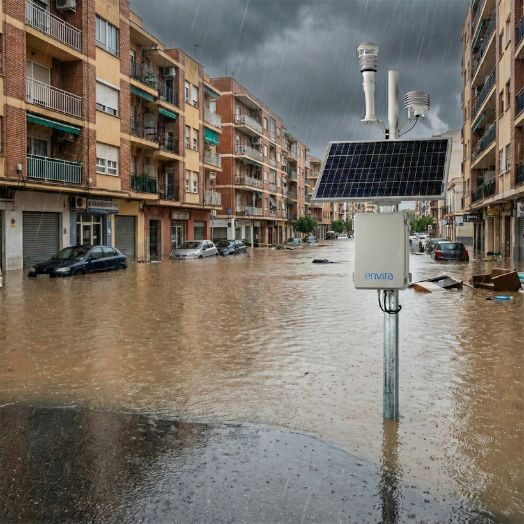
Flood warning

Flood warning

Implement early warning systems (EWS) for extreme weather events.

Multiple use cases

Weather monitoring and forecasting is of key importance in sectors such as solar thermal power plants and precision agriculture, and also serves as a road safety warning system on secondary roads and for early flood detection.

Professional weather station for solar thermal plants

In solar thermal plants, wind and reflectivity are everything.

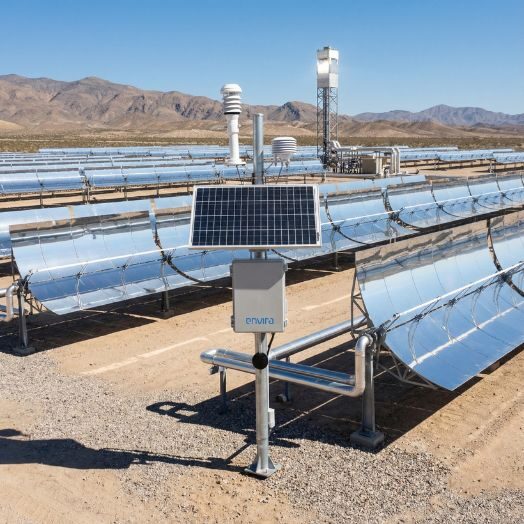
Mirrors are extremely sensitive to wind load, so the ultrasonic anemometer can detect wind gusts of up to 70 m/s without mechanical inertia, activating the defence position (stow) of the solar trackers seconds earlier than with a traditional cup anemometer, thus preventing structural deformation.

In addition, the photodiode pyranometer allows the global incident radiation to be monitored to compare it with the Direct Normal Irradiance (DNI) and thus assess the general operating conditions in case maintenance is required.

Weather station for precision crop management

Having a fully autonomous weather station in the field allows you to obtain accurate and precise meteorological data even in remote crops without electricity, thanks to the solar panel and battery power option.

It calculates the risk of frost and measures effective rainfall with an accuracy of ±5%, protecting crops and saving irrigation water.

Combined with the Nanoenvi AG sensor, it also allows you to monitor a wide range of soil parameters such as conductivity and pH (among others), which are essential for total crop control.

Road weather station

As a secondary road weather station, Nanoenvi MET, equipped with IoT sensors, provides a network of weather stations to monitor inland roads, creating an early warning system for road weather.

  • The radar sensor instantly detects precipitation intensity, allowing variable message signs to be activated before the road becomes flooded.
  • Temperature and humidity sensors help predict the appearance of ice patches.
  • Wind speed and direction sensors provide warnings of crosswinds, which are particularly dangerous for heavy transport.

Its 4G/LoRaWAN connectivity and solar panel and battery power supply allow Nanoenvi MET stations to be installed on any section of the road network, without the need for trenches or civil engineering works.

Flood forecasting system

Thanks to the reliability and resolution of Nanoenvi MET’s radar rain sensor, the station can be used as a flood prediction system. It guarantees continuous measurement of intensities of up to 200 mm/h without risk of jamming and detects torrential intensity peaks by the second.

With a solar panel and 96Wh battery, the station can continue to transmit data via 4G or LoRaWAN even if the mains power and wired communications fail.

Its compact and portable design allows monitoring networks to be installed at river headwaters and in mountainous areas that are difficult to access, where runoff originates, sending alerts long before the water reaches urban centres.

SPECIFICATIONS

POWER

100-240VAC @ 50-60Hz (PGD / PGC) : PoE ++ (IEEE 802.3bt) : Solar panel (included)

MAX. CONSUMPTION

30W (PGC / SP) | 55W (SP-L) | 60W (PGD) | 55W (PoE)

AVERAGE CONSUMPTION

2 W

BATTERY

96Wh LiFePO4 (PGD / SP / SP-L)

AUTONOMY

24x7

ENVIRONMENTAL OPERATING CONDITIONS

- 20 ~ 55ºC / 0 ~ 99%RH (no condensation)

CASE MATERIAL

ABS, polyurethane, aluminium and stainless steel

IP PROTECTION

IP65

MAX. WEIGHT

2Kg (PGC / PoE) | 3,5Kg (PGD / SP) | 4,5Kg (SP-L)

SOLAR PANEL WEIGHT WITH BRACKET

3,2Kg (SP) | 4,2Kg (SP-L)

DIMENSIONS

500x260x200 mm

SOLAR PANEL DIMENSIONS

560x350x25 mm (SP) | 545x668x25 mm (SP-L)

CONNECTIVITY

4G/LTE | Ethernet | Wi-Fi | LoRaWAN

ACQUISITION PERIOD

30 Seconds

DISPATCH PERIOD

From 1 to 10 mins

WIND SPEED

0-70m/s, resolution 0.1m/s, accuracy ±3%.

WIND DIRECTION

0-359°, resolution 1°, accuracy ±3°

RAINFALL

0 - 200mm/hr, resolution 0.1mm, accuracy ±5%.

SOLAR RADIATION

0 - 2000W/m2, resolution 0.1W/m2, accuracy ±5%.

ILLUMINANCE

0 ~ 200000 lx, resolución 0.1 lx, accuracy ±5%

AIR TEMPERATURE

-40ºC - +86ºC, resolution 0.1º, accuracy ±0.5ºC

RELATIVE HUMIDITY

0 - 100%, resolution 0.5%, accuracy ±3%

ATMOSPHERIC PRESSURE

100 - 1100hPa, Resolution 0.1hPa, Accuracy ±1hPa

Frequently asked questions about the Nanoenvi MET weather station

Why is Nanoenvi MET station technology superior to traditional mechanical weather stations?

The Nanoenvi MET station removes the main point of failure in conventional stations: moving parts. It uses ultrasonic anemometry for wind and radar technology for precipitation.

This means there are no cups to break from hail or rain gauges to clog with leaves or dirt. It is the ideal technical solution for remote locations where the cost of sending a technician exceeds the value of the equipment.

What autonomy does the equipment offer in isolated locations without an electrical grid?

The system is natively autonomous. It can be configured with a 30W or 55W solar panel and a 96Wh lithium battery, ensuring 24/7 operation. It does not require the installation of external electrical cabinets or complex civil engineering works, which drastically reduces CAPEX in road or extensive agriculture projects.

How does the Nanoenvi MET weather station help improve the efficiency of solar thermal power plants?

In solar plants, dirt and wind are critical factors. The station monitors solar radiation to calculate the expected performance (Performance Ratio).
Simultaneously, by correlating rainfall (radar technology) and wind speed, operators can optimise panel cleaning cycles and automatically retract trackers if wind gusts exceed safety thresholds, protecting the infrastructure.

Is Nanoenvi MET useful as an early flood warning system?

Yes, thanks to its real-time radar rain gauge and 4G/LoRaWAN communications, the system can send real-time alerts about peaks in rainfall intensity before river flows increase, gaining vital time for the activation of emergency protocols.

What value does it bring to Precision Agriculture?

Beyond rainfall, Nanoenvi MET measures relative humidity, temperature, and pressure with high precision. This data is processed to calculate evapotranspiration and dew point, allowing farmers to activate irrigation only when strictly necessary or apply plant protection products during optimal weather windows, saving inputs and improving crop sustainability.

Can it be used to monitor the condition of secondary roads and winter viability?

Absolutely. Its robust design (IP65 and materials such as stainless steel and aluminium) withstands harsh environments. Monitoring temperature and humidity at roadside is vital for predicting the formation of ice patches. Furthermore, as it has no mechanical parts, it does not suffer wear and tear from heavy traffic vibrations or the salinity of winter de-icing salts.

see more

Do you want to request your Quotation?

Send your request