en
es en
Phone +34 985 73 39 52

solutions

Ultrapure Water (UPW) Contaminant Monitoring and Control Solutions for Treatment Plants

Home » Sectors » Ultrapure Water (UPW) Contaminant Monitoring and Control Solutions for Treatment Plants

The production of ultrapure and demineralised water requires precise control of water quality at every stage of the treatment process. Even small deviations in critical parameters can affect plant performance in these types of facilities, compromising the final purity of the water and causing issues in processes where a reliable supply is essential.

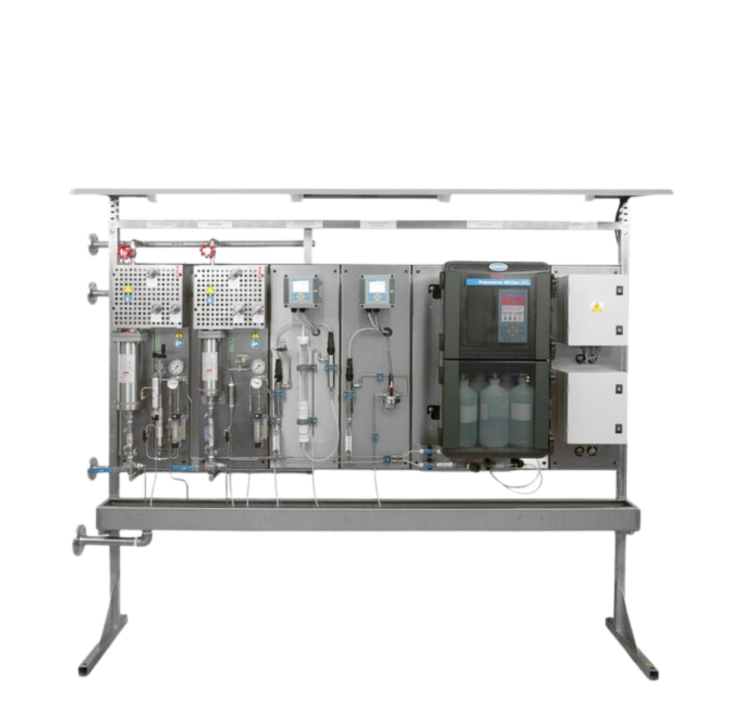
At Envira, we develop continuous monitoring solutions for ultrapure and demineralised water production plants. These solutions are designed to monitor treatment performance and water quality in real time.

Our solutions integrate ultrapure water instrumentation and analysis equipment, analytical monitoring and data acquisition systems, enabling the monitoring of key process variables, the protection of sensitive equipment and the facilitation of more efficient, stable and traceable operations.


Why is it so important to continuously monitor ultrapure water (UPW)?


Both UPW and demineralised water are essential in industries where water quality directly impacts process integrity, product safety and asset protection.

In production plants, continuous monitoring and control of ultrapure deionised water ensures treatment stability, enables the early detection of deviations and maintains water quality within the specifications required by the final process.

Ultrapure or demineralised water is required in industries such as:

  • Pharmaceutical
  • Food and beverage
  • Chemical
  • Semiconductor and microelectronics manufacturing
  • Energy and steam production
  • Laboratories and facilities with high-purity requirements
Continuous monitoring of water quality

Continuous monitoring of water quality

We offer a wide range of continuous monitoring equipment and sensors that can be used to design continuous, real-time monitoring systems for ultrapure and demineralized water production plants.

Contact

The operational benefits of continuous monitoring in Ultrapure Water Production

Greater stability in the quality of the water produced

Greater stability in the quality of the water produced

Protection of sensitive equipment and critical stages

Protection of sensitive equipment and critical stages

Early detection of deviations and alerts

Early detection of deviations and alerts

Improved traceability and operational control

Improved traceability and operational control

Technologies for the Production of Ultrapure and Deionized Water

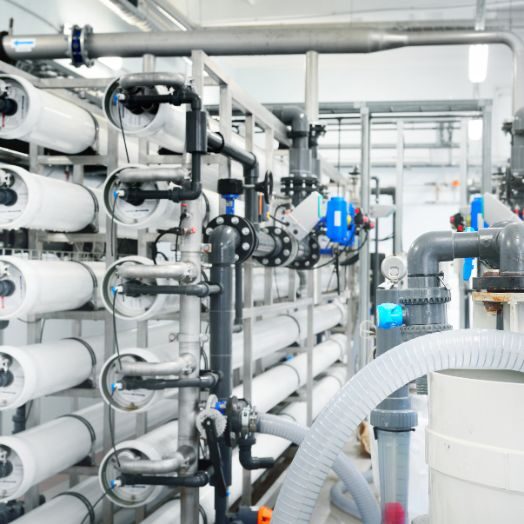
The production of ultrapure and demineralised water relies on a combination of technologies that must be selected and sized based on the quality of the feed water and the requirements of the final process.

These plants typically combine pretreatment stages (such as filtration, solids removal, pH adjustment or dechlorination) to prepare the feed water, as well as membranes, ion exchange and polishing processes, in order to achieve the required purity levels.

Depending on how critical the end use is, the plants may also incorporate UV disinfection, safety filtration and final polishing stages to minimise the presence of organic matter, particles and contaminants that could affect sensitive equipment or processes such as pharmaceutical production, electronics manufacturing or high-pressure steam generation.

Critical Parameters to Monitor in the Production of Ultrapure or Demineralized Water

In an ultrapure or deionized water production plant, monitoring critical parameters is essential for verifying both water quality and the performance of each stage of the system:

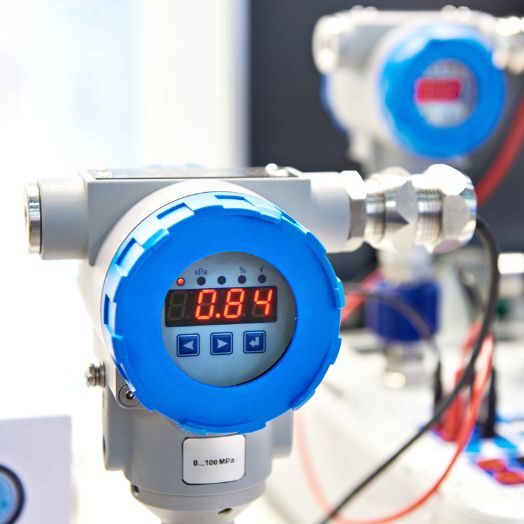
  • Conductivity and resistivity monitoring to verify the purity level of the treated water and the ultrapure deionized water in the polishing stages.
  • Monitoring pH and temperature to ensure process stability and water quality in process water and ultrapure water circuits.
  • Monitoring flow rate and pressure to oversee the hydraulic performance of the installation and the operation of ultrapure water equipment.
  • Monitoring turbidity and the quality of the feedwater when pretreatment affects subsequent reverse osmosis and demineralization stages.
  • Monitoring other specific analytical variables depending on the industry, process, and operational requirements.


SCADA Integration and Plant Control

For a continuous monitoring solution to be truly useful, simply measuring data is not enough: it is necessary to integrate instrumentation and analytics into a data utilization framework aligned with the facility’s actual operations.

In this context, we develop custom solutions for data acquisition, the visualization of critical variables, the generation of alerts, and operational traceability. This integration improves plant operations, facilitates operational decision-making, and ensures greater control over the quality of the water produced.

Ultrapure water infography

Frequently Asked Questions (FAQ) about continuous monitoring in Ultrapure Water Production Plants

What parameters should be monitored in an ultrapure or demineralized water plant?

The parameters to be monitored depend on the end use of the water and the system’s design, but typically include conductivity, resistivity, pH, temperature, flow rate, and other critical variables for verifying water purity and process stability.

Why is continuous monitoring important in an ultrapure water plant?

Because even small deviations can affect the final water quality, treatment efficiency, and the protection of equipment connected to the system. Continuous monitoring allows for early detection of incidents and improves operational traceability.

Can the solution be integrated with the SCADA or PLC system at the production site?

Yes, the industrial water measurement and monitoring solutions offered by Envira can be integrated with plant control systems, allowing data, alarms, and operational management to be centralized within a single architecture.

What are the differences between demineralized water and ultrapure water?

Both require treatments designed to reduce impurities and dissolved salts, but ultrapure water demands a stricter level of control and higher quality standards for particularly sensitive applications. The exact definition depends on the end use and the process specifications.

What does Envira bring to this type of facility?

At Envira, we provide customized solutions for continuous monitoring, instrumentation, analytics, and data utilization to continuously monitor water quality and plant performance, with integration into automation systems and a clear focus on reliability and traceability.

see more

Do you want to know more about Ultrapure Water (UPW) Contaminant Monitoring and Control Solutions for Treatment Plants?

Contact us